Snow Belt Snowmelt: Why Girard Basements Flood in Late February
Most Girard basement floods do not happen during heavy rain. They happen in late February when two or three feet of lake-effect snow comes off the ground over a single warm week. Here is why that one stretch of winter kills basements and how to prep for next February before it hits.
Published · By Anthony Kowalski
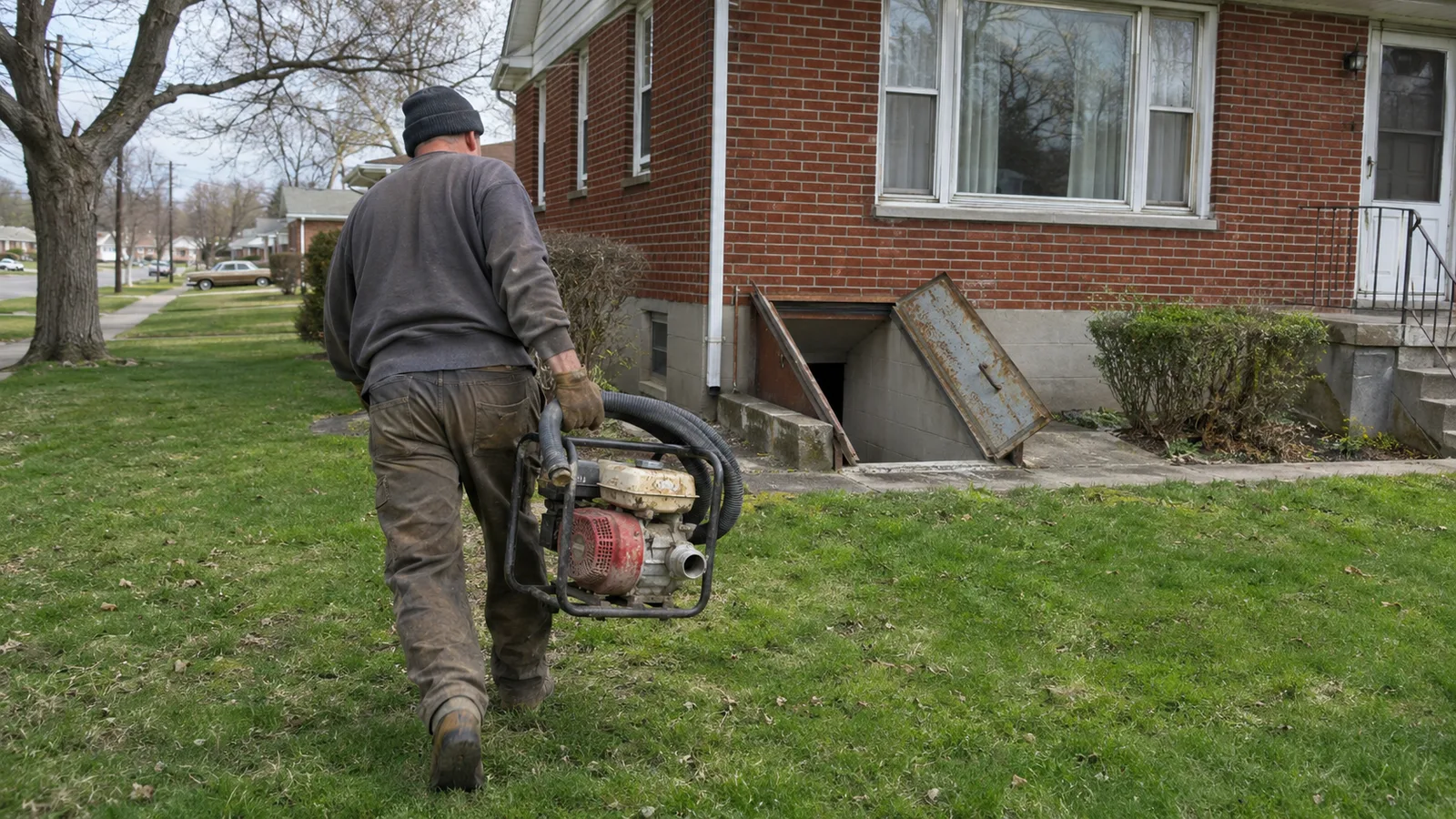
If you have lived in Girard for more than three winters, you have seen the pattern. January is dry. Early February is still frozen solid. Then the last week of February warms up into the 40s and 50s, and every basement on Churchill Road and Prospect Street floods at once. This is not random weather. It is the single worst stretch of the year for Mahoning Valley basements, and the reason comes down to three things stacking on top of each other.
What makes late February different
Girard sits in the Lake Erie snow-belt path. From mid-December through mid-February we typically pack 18 to 36 inches of snow on the ground across the Mahoning Valley, built up in layers from repeated lake-effect events. Under that snow, the glacial till clay is frozen solid 2 to 3 feet deep. Both of those facts matter. When the late-February warm-up comes, the snow melts fast on top but the clay underneath is still frozen. The meltwater cannot soak in. It runs sideways through the top soil layer until it finds the fastest path down, which is almost always along the outside of your foundation wall.
Why the water heads straight for the foundation
The backfill around your basement wall is looser and more permeable than the undisturbed clay 20 feet from the house. That means every rainstorm and every snowmelt finds that backfill zone as the path of least resistance. In late February, millions of gallons of meltwater come off the Mahoning Valley over a week, hit the frozen clay, and funnel straight down that 2-foot band of looser backfill against the foundation wall. The hydrostatic pressure on your wall during that week is the highest pressure your wall sees all year, often 2 to 3 times what it sees in a July thunderstorm.
Why the cove joint is where it comes in
On almost every Girard home built before 1980, the cove joint where the wall meets the slab is the weakest point against hydrostatic pressure. The water does not come through the wall itself. It comes up from under the slab and sideways through the cove. You will notice the floor wet along the perimeter before you ever see water running down the wall. That is the tell. In older 1920s brick homes off Liberty Street downtown the cove is an open seam with no waterproof detail at all. In 1950s and 1960s cinder-block ranches the cove sits on top of a footer that has settled slightly, creating a channel the water follows around the room.
Why a sump pump alone is not enough
A working sump pump moves water out of the pit. It does not keep water out of your basement. If you have a cove-joint leak and no interior French drain, the sump pump has nothing to catch the water coming in. It just sits in a dry pit while your floor floods. This is the single most common disappointment we hear in late February: "My sump pump is working, why is my basement wet?" The answer is that water is finding paths the pump cannot see. The fix is a perimeter French drain tied to the sump pit, which catches the water at the cove and routes it to the pump.
Why your sump discharge freezes shut
The second-most-common late-February call is a sump pump running constantly without pumping water out. That is a frozen discharge line. Standard white PVC run straight out of the foundation and dumped 2 feet from the wall freezes solid in the February cold snap. The pump cycles, the check valve holds back the water, and the pit fills up until it overflows. A freeze-resistant IceGuard fitting at the foundation wall, plus burying the discharge line at least 12 inches deep and routing it 6 feet off the house, costs $150 to $300 on install and prevents that failure entirely.
Why clay-pressure cracks open wider every February
The freeze-thaw cycle is what makes the leaks get worse year over year. In January the water in any existing hairline crack freezes and expands, widening the crack slightly. In the February thaw the water pushes through the widened crack. The following January it freezes a little deeper into the now-wider crack. Each year the crack doubles its width over the one before. A hairline crack in year 1 is a quarter-inch crack in year 7. That is why the "little leak that only happens in February" turns into a monthly problem inside a decade.
What to do before next February
Honest list. If your basement has flooded twice in the past five late-Februaries, do not wait for a third one. Schedule a free on-site inspection in September or October. Interior French drain installs run 2 to 4 days and must be done while the ground is unfrozen. Waiting until February means standing in a wet basement waiting for a truck. The three high-value fixes to stage before winter are: perimeter French drain plus sump pit at $4,500 to $9,500, battery backup sump pump at $900 to $2,200 (power outages are higher in February ice storms), and IceGuard freeze-resistant discharge at $150 to $300.
What you can do yourself right now
Three free or near-free steps before next winter. First, shovel snow at least 6 feet away from the foundation all winter instead of piling it against the house. A single snow pile against a basement wall concentrates meltwater on one spot. Second, extend every downspout to at least 6 feet off the foundation. Flexible hose works, buried pipe is better. Third, test your sump pump every October by pouring 5 gallons into the pit. If the float sticks or the pump short-cycles, replace it in the fall, not in the February emergency.
If your Girard basement is one of the ones that flooded last February, or you can see the hairline crack that is going to open up this winter, call the shop. We will walk the house in October, give you an honest quote, and get the fix in before the snow builds.